

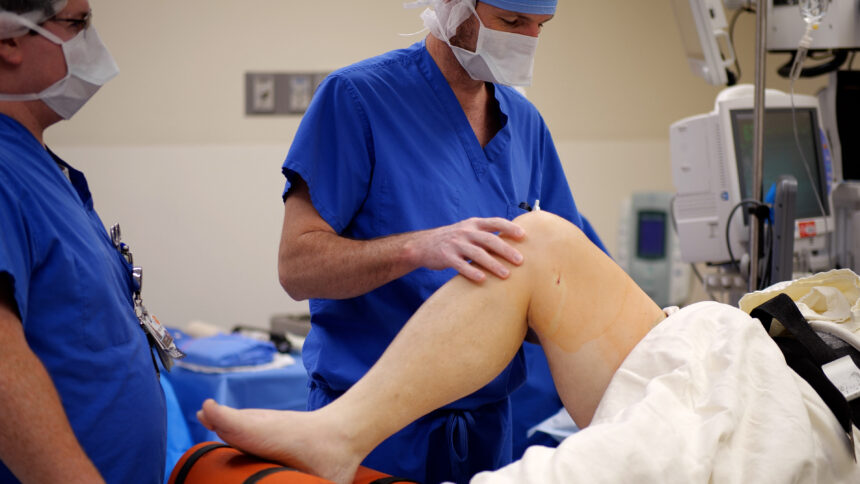
Knee replacement surgery offers a solution for individuals suffering from severe joint pain that limits their daily activities. This procedure involves removing damaged bone and cartilage from your knee and replacing it with an artificial joint made of metal alloys, high-grade plastics, and polymers. Orthopedic surgeons perform this operation to restore knee function and alleviate discomfort caused by various conditions. Here is some information about total and partial knee replacement:
Total Knee Replacement
A total knee joint replacement addresses the entire knee joint. During this procedure, the surgeon resurfaces the ends of the femur and tibia. They replace the damaged cartilage and bone with metal components that recreate the surface of the joint.
A plastic spacer is inserted between the metal parts to create a smooth gliding surface, and sometimes, the undersurface of the kneecap is also resurfaced with a plastic button. This comprehensive approach is designed for knees with damage that has spread across multiple joint compartments. Recovery typically involves physical therapy to regain strength and range of motion.
Conditions Treated
Types of arthritis are a common reason for total knee replacement surgery, and they can include:
- Osteoarthritis: This degenerative joint disease causes the breakdown of joint cartilage and underlying bone.
- Rheumatoid arthritis: This chronic inflammatory disorder that affects the lining of joints can also necessitate this procedure.
- Post-traumatic arthritis: This follows a serious knee injury and may lead to significant joint damage requiring total replacement.
Partial Knee Replacement
Partial knee replacement targets only the specific damaged area of the knee. The knee is divided into three compartments: the inside, outside, and front compartments. If the damage is confined to a single area, surgeons may opt to replace only that section. This preserves the healthy bone, cartilage, and ligaments in the unaffected parts of the knee.
Partial knee joint replacement offers several benefits compared to total replacement. These include a quicker recovery time, less postoperative pain, and the retention of more natural knee motion. Because less bone and tissue are removed, the surgery is typically less invasive, resulting in smaller incisions and minimal disruption to surrounding muscles. This procedure may also reduce the risk of complications, such as blood loss and infection.
Conditions Treated
This procedure is for patients with osteoarthritis restricted to a single compartment of the knee. The inside compartment is a common site for localized arthritis. To be a candidate, you generally must have intact ligaments, particularly the anterior cruciate ligament (ACL). Your surgeon will evaluate X-rays and perform a physical examination to determine if the disease is truly limited to one area.
Work With an Orthopedic Surgeon
Choosing the right surgical path requires a detailed evaluation by a qualified medical professional. An orthopedic surgeon will assess the extent of the damage through imaging tests and a physical exam to recommend the appropriate procedure for your anatomy. They will explain the potential risks and expected recovery process for both options. Schedule a consultation with an orthopedic team today to discuss which knee replacement option fits your needs.